
 Available in GB
Table of Contents
- The Regulatory Framework Behind UK Online Casinos
- Casino Games and the Main Ways to Play
- Slots: Formats, Features and Responsible Play
- Game Providers and the Software Layer
- Payments, Deposits and Withdrawals in Great Britain
- Bonuses and Promotions Under UK Gambling Rules
- Casinos Not on GamStop: Regulatory Status and Player Protection
The Regulatory Framework Behind UK Online Casinos
Online casinos serving consumers in Great Britain operate within a statutory and licensing framework rather than an unregulated digital marketplace. The central legislation is the Gambling Act 2005, which governs gambling in Great Britain and provides the legal basis for the regulator’s powers. The framework covers both land-based and online casinos, although online activity requires a specific form of authorisation.
The Gambling Act 2005 and the UKGC
The UK Gambling Commission, commonly called the UKGC, was established under the Gambling Act 2005 and assumed full powers in 2007. Its remit includes the regulation of land-based and online casinos within Great Britain. In the online context, this means that an operator’s location is not decisive: operators providing online gambling services to consumers in Great Britain must hold a UKGC licence regardless of where the business is based.
The Act also supplies the enforcement foundation for the regulatory system. The UKGC can investigate illegal gambling and take action where licensed operators fail to meet their obligations. Its available measures include warnings, licence conditions, financial penalties, suspensions and revocations. The existence of these powers is important to the meaning of licensing: a licence is not merely a commercial registration, but an authorisation subject to continuing regulatory control.
This index highlights UK operators by focusing on the practical details that matter when choosing where to play. Use it to review licensing, bonus offers, payout times and minimum deposit requirements at a glance.
License: UKGC Operator Licence · Bonus: £50 bonus · Payout speed: Within 48 hours · Min. deposit: £10 A UKGC-licensed operator offering a £50 bonus. It supports payouts within 48 hours and has a £10 minimum deposit.
License: UKGC Operator Licence · Bonus: £20 bonus · Payout speed: Within 48 hours · Min. deposit: £10 This UKGC-licensed operator features a £20 bonus and a £10 minimum deposit. Payouts are available within 48 hours.
License: UKGC Operator Licence · Bonus: £100 bonus · Payout speed: Within 24 hours · Min. deposit: £10 A UKGC-licensed operator with a £100 bonus and payouts within 24 hours. The minimum deposit is £10.
License: UKGC Operator Licence · Bonus: £100 bonus · Payout speed: Within 24 hours · Min. deposit: £10 This UKGC-licensed operator offers a £100 bonus and payouts within 24 hours. It has a £10 minimum deposit.
License: UKGC Operator Licence · Bonus: £200 welcome bonus · Payout speed: Within 48 hours · Min. deposit: £10 A UKGC-licensed operator offering a £200 welcome bonus. Payouts are processed within 48 hours, with a £10 minimum deposit.
License: UKGC Operator Licence · Bonus: £100 bonus · Payout speed: Within 24 hours · Min. deposit: £10 This UKGC-licensed operator provides a £100 bonus and payouts within 24 hours. The minimum deposit is £10.
Types of Gambling Licence
The UKGC issues three principal categories of licence to gambling operators:
- Operating licences, which authorise specified gambling activities;
- Personal licences, associated with individuals whose roles require regulatory approval; and
- Premises licences, connected with gambling activity at physical premises.
These categories should not be treated as interchangeable. A premises licence concerns a physical location, while an operating licence concerns the business activity being conducted. Personal licensing applies to relevant individuals rather than to the casino as a consumer-facing service.
For online casinos, the key authorisation is a remote operating licence. Remote gambling is the legally precise term for gambling conducted through distance communication, including online casino services. A remote operating licence is required for online gambling activities in Great Britain. Therefore, a website presenting casino services to consumers in England, Wales or Scotland cannot rely on the fact that its company is incorporated or licensed elsewhere. The relevant question is whether the operator holds the authorisation required for the British market.
Licensing and Verification
The licensing process provides a formal route for assessing an operator before it offers regulated gambling services. UKGC applicants must be at least 18 years old. The Commission assesses matters including identity and ownership, finances, integrity, competence and criminality. Application fees are non-refundable whether or not a licence is granted, and the UKGC’s standard application processing time is approximately sixteen weeks.
A licence claim can be checked against the UKGC’s public register of current operating and personal licences. The meaningful verification is not limited to finding a company name. The operator name or licence number should correspond with the register, and the domain listed there should match the website being examined. This domain comparison helps distinguish an authorised service from a site using a similar corporate identity or presenting outdated licensing information.
Legal Gambling Age 18
Regulatory Body UK Gambling Commission (UKGC)
Licence Requirement Remote operating licence
Tax on Winnings 0% (Tax-free)
The public register also records recent regulatory actions, including licence conditions, fines, warnings and revocations. It therefore provides more information than a simple yes-or-no licence indicator. A current licence confirms that an operator appears on the register at the time of checking; the recorded regulatory history supplies additional context about formal action taken by the Commission.
Why the Framework Matters
The regulatory structure establishes the legal baseline for the subjects covered elsewhere in this article. Payment practices, promotional activity, identity checks and player-protection procedures exist within obligations attached to remote gambling operations. Those topics are distinct, but they cannot be assessed accurately without first identifying the operator’s legal status and the scope of its authorisation.
The essential distinction is between a casino that provides remote gambling to Great Britain under the UKGC framework and a website whose relationship with that market has not been established through the Commission’s licensing system. The Gambling Act 2005 supplies the legislative foundation, the UKGC administers the system, and the remote operating licence connects the general law to the online casino service itself.
Casino Games and the Main Ways to Play
Casino games form a broad category rather than a single type of activity. The same online casino environment may present games based mainly on chance, games involving decisions during play, and live formats designed to reproduce elements of a physical gaming venue. These categories differ in pace, interaction and presentation, but they share the same basic setting: a player selects a game, chooses a stake where permitted, and receives an outcome generated or delivered through the operator’s gambling service.

Different forms of casino play
The most straightforward distinction concerns how the outcome is produced. Some games use software to determine each result. They can be played independently of other participants and generally follow a repeated cycle: a selection is made, the game resolves, and the next round becomes available. This format is associated with rapid, self-contained play and with interfaces built around automated results.
Other casino games require decisions as part of each round. The player may need to choose an action, assess the current position or decide whether to continue. Such decisions do not remove the element of chance, but they change the structure of participation. The game becomes less passive because the player’s choices form part of the sequence that leads to the final result.
Live casino games add a further distinction. Instead of presenting every stage solely through software animation, a live format uses a streamed or otherwise hosted table environment. The visual presentation may resemble a conventional casino, with a dealer or presenter overseeing the round. The underlying gambling activity remains remote, but the format introduces a shared table setting and a more event-based rhythm.
These forms should not be treated as interchangeable. A software-based game may suit short, independent sessions, while a live table may place greater emphasis on the pace of the round and the presentation of the host. A decision-led game may require more attention than a format in which the result is determined after a single selection. The relevant comparison is therefore not only the game’s name, but also the way participation is organised.
How a game fits within an online casino
An online casino is best understood as a regulated gambling environment containing several forms of remote play, rather than as one game in its own right. Game choice determines the immediate structure of the session, while the wider operator environment determines how the account, age controls and access to play are handled. The distinction matters because a player may move between different formats without leaving the same online service.
Games using automated software to determine results, typically offering rapid, self-contained play.
Games where player choices form part of the sequence leading to a final result.
Streamed table environments with a dealer or presenter, providing an event-based rhythm.
Presentation also affects how a game is experienced. A compact interface can make repeated rounds easy to initiate, whereas a live interface may devote more space to the table, dealer and current action. Visual design can clarify the available choices and display the state of a round, but it does not turn chance into certainty or establish that one format is financially preferable to another.
The pace of play is another practical difference. Automated games can make successive rounds available with little interruption. Live games normally follow the rhythm of the hosted table, and decision-based games may pause while an action is selected. Faster access to another round should not be confused with a better outcome. It only describes the mechanics of the session.
Legal context for players in the UK
The general legal gambling age in the UK is 18. Age is therefore a threshold condition for participation in casino games, regardless of whether the chosen format is automated, decision-led or live. Descriptions of game mechanics should not obscure this basic restriction.
Winnings from gambling are not subject to gambling tax for players in the UK. This treatment applies regardless of the amount won. It concerns the tax position of winnings, not the probability of success, the cost of participation or the risks associated with repeated play.
No verified facts support naming particular games, comparing individual titles or identifying a superior format. A neutral assessment can still distinguish the main ways to play: software-generated rounds, games incorporating player decisions, and live hosted tables. Each represents a different interaction model within the same broader category of Casino Games, and the differences are primarily structural rather than evidence of a guaranteed financial advantage.

Slots: Formats, Features and Responsible Play
Slots are a distinct form of casino play because the outcome is generated by a randomised sequence rather than by decisions made against another participant or a dealer. Their presentation commonly centres on reels, symbols, paylines, and an immediately visible result. The format can be delivered through a digital interface, where the player selects a stake and starts a spin, or through other machine-based arrangements. The essential feature is the self-contained spin: each result is determined independently, and previous outcomes do not establish a reliable pattern for the next one.
How slot formats differ
Digital slots may vary in visual design, reel layout, payline structure, and additional features. Some use a conventional reel display, while others present different arrangements or bonus stages. These differences affect how the game is displayed and experienced, but they do not turn a previous result into evidence about a future one. A sequence of wins does not make a loss necessary, and a sequence of losses does not make a win due.
The distinction between formats should therefore be kept separate from claims about profitability. A slot’s appearance, theme, or feature structure does not establish that it offers a better financial outcome. Without verified information about a particular product, comparisons based on return, volatility, or provider cannot be made responsibly. The relevant practical question is instead whether the controls and playing conditions are clear before participation begins.
Controls that support responsible play
Responsible gambling tools are intended to place boundaries around participation rather than to predict or improve results. A deposit limit restricts the amount that can be added to an account during the period selected by the operator’s system. A loss limit addresses a different measure: the amount lost through play. Session time limits concern duration, while reality checks provide prompts indicating how long play has continued. These tools are complementary because money and time are separate dimensions of gambling activity.
- Set deposit, loss, and session time limits.
- Use reality checks and timeouts.
- Utilise self-exclusion for longer breaks.
- Relying on a sequence of wins or losses to predict outcomes.
- Treating promotional offers as guaranteed returns.
- Ignoring regulatory verification steps.
Timeouts offer a temporary interruption, whereas self-exclusion is designed for a longer separation from gambling. The UK framework requires operators to provide deposit limits, loss limits, session time limits, reality checks, timeouts, and self-exclusion. The minimum self-exclusion period is six months. These controls are not features that alter random outcomes; they are account and access measures intended to make continued play less automatic.
Slots also fall within a specific statutory restriction. From 9 April 2025, online slots are subject to a £5 per-spin limit for players aged 25 and over. This is a stake rule, not a statement about expected winnings or the probability of a particular result. It should not be confused with a personal deposit limit, which concerns the amount placed into an account.
Age, status and verification
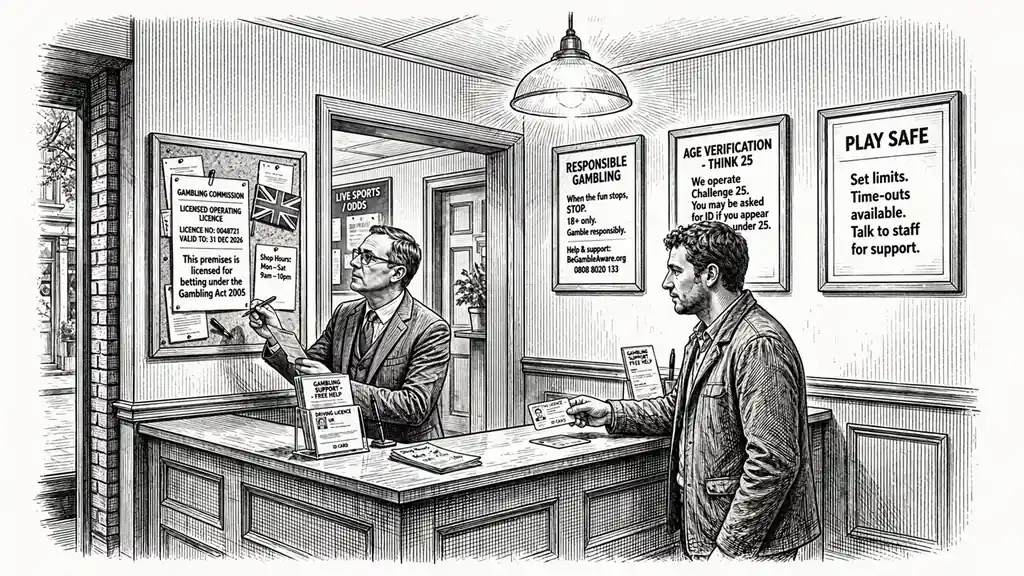
The general legal gambling age in the UK is 18. Age controls are therefore relevant before slot play is permitted, and personal details may need to be verified as part of the operator’s procedures. A licence check provides a separate form of verification. The UKGC maintains a public register of current operating and personal licences, and a casino’s stated licence can be checked by matching the operator name or licence number with the register and confirming that the listed domain corresponds to the website being used.
This distinction matters because a slot interface alone does not demonstrate that the surrounding service is authorised. The game screen, payment area, account controls, and operator identity belong to the wider gambling service. Licence information should be assessed independently rather than inferred from branding or presentation.
Winnings and financial interpretation
Customers in the UK pay no gambling tax on winnings. Gambling winnings are tax-free regardless of the amount won. That tax treatment does not change the random nature of slot results, remove the possibility of losses, or make a particular format financially advantageous. It is also separate from the safeguards governing account use.
Responsible play consequently depends on limits and interruptions being treated as active controls, not as predictions. Setting a boundary before starting a session can define how much money or time is available for that activity; it cannot determine whether the next spin wins. Where play becomes difficult to control, a timeout or self-exclusion measure is more relevant than changing the selected slot format.
Game Providers and the Software Layer
Game providers occupy a distinct position within the online casino ecosystem. They supply the software through which casino content is delivered, while the casino operator presents that content to customers and manages the gambling service. These functions may interact closely, but they are not identical. A provider’s role is primarily connected with the creation, maintenance and technical delivery of games; an operator’s role concerns the provision of the gambling service to consumers.
This distinction matters because software supply does not, by itself, establish that a particular casino may legally serve customers in Great Britain. The relevant regulatory obligation applies to the operator providing online gambling services. Operators serving consumers in Great Britain must hold a UKGC licence, regardless of where those operators are based. The UK Gambling Commission regulates both land-based and online casinos within Great Britain.
What a game provider does
A game provider develops or supplies the technical product used within a casino environment. That product can include the game interface, the underlying software, the systems required to operate the game and the tools needed to integrate it into an operator’s website or application. The provider may therefore be responsible for the software layer that customers see and use, even though it does not necessarily control the wider customer relationship.
Remote Operating Licence
A specific authorisation required for entities providing online gambling services through distance communication in Great Britain.
The software layer can be understood as the part of the gambling service that connects game content with the operator’s platform. It must function within the operator’s technical environment and support the presentation of the game to customers. This can involve integration work, ongoing software maintenance and the delivery of updates. None of those activities should be confused with the operator’s responsibility for offering gambling services to people in Great Britain.
A casino may rely on externally supplied software rather than building every game internally. That arrangement allows the operator to obtain game content from a specialist provider while retaining responsibility for its own website, customer accounts and gambling operations. The existence of a provider relationship does not transfer the operator’s regulatory duties to the software supplier.
Provider, operator and regulator
The three roles are separate. The provider supplies game software. The operator makes the gambling service available to customers. The UKGC regulates the relevant casino activity within Great Britain. A provider can therefore be part of the technical infrastructure without being the entity that holds the customer-facing operating licence.
This separation also limits what can be inferred from a game’s availability. The presence of familiar software, a polished interface or a broad catalogue does not demonstrate that the casino itself is authorised to operate in Great Britain. Licensing must be considered at the level of the operator offering the service. The operator’s name and licence details are the relevant identifiers for checking its position against the UKGC’s public register.

The same principle applies in reverse. A UKGC licence indicates that the operator is authorised within the regulatory framework applicable to Great Britain; it does not, by itself, identify who created every item of software available on the platform. Provider information and operator licensing answer different questions.
Why the software layer matters
The software layer affects how games are delivered, displayed and maintained, but it should not be treated as a substitute for regulatory verification. Technical quality and legal status are separate attributes. A game may be integrated into a casino platform through a third-party provider, while the operator remains accountable for providing online gambling services lawfully to its Great Britain customers.
This distinction is particularly important when casino information is presented through broad software labels. A provider name may describe the source of game content, but it does not necessarily describe the company accepting customers, managing accounts or operating the casino website. Treating the two entities as interchangeable can obscure who is responsible for the gambling service.
No provider names are asserted here because the verified information does not identify particular software companies or establish comparative facts about their products. Accordingly, the provider layer is best assessed by function: software supply concerns the creation and technical delivery of games, whereas casino operation concerns the regulated service made available to consumers. In Great Britain, that service requires the operator to hold a UKGC licence.
Payments, Deposits and Withdrawals in Great Britain
Payment rules determine how money enters an online casino account, how it can be used, and how remaining funds are returned. In Great Britain, these processes operate within a regulated gambling environment rather than as ordinary retail transactions. The legal position of the operator is therefore relevant to deposits and withdrawals: an account connected with an unverified or incorrectly represented licence may create avoidable uncertainty about the business handling the funds.
Verify Operator Status
- Match the operator name or licence number against the UKGC public register.
- Confirm the website domain matches the one listed in the register.
- Check for any recent regulatory actions or licence conditions.
Deposits and payment eligibility
The general legal gambling age in the UK is 18. Age is therefore a basic condition for opening and using an online casino account. Payment access does not alter that requirement. A successful card or banking transaction is not evidence that gambling is legally available to a person below the permitted age.
The same distinction applies to taxation. Gambling winnings for customers are tax-free in the UK regardless of the amount won, and players pay no gambling tax on those winnings. Tax treatment does not mean that every payment issue disappears, however. It remains necessary to distinguish gambling winnings from the transfer, verification and account records associated with an operator.
The operator’s identity should be clear before funds are deposited. The UKGC maintains a public register of current operating and personal licences. A casino licence can be checked by comparing the operator name or licence number with that register and confirming that the domain used by the casino is the one listed. This domain check matters because a genuine licence entry does not automatically establish that every website using a similar name belongs to the licensed business.
Withdrawals and account balances
A withdrawal is not merely the reverse of a deposit. It concerns the release of funds recorded on the gambling account, including any balance that remains after play and any winnings. The relevant question is whether the customer’s balance is being handled by the operator identified in the licensing record, rather than by an unrelated website using comparable branding.
Payment information and account information should therefore be considered together. The name of the operating company, the licence details and the domain should correspond. Where those details do not align, the public register provides a more reliable reference point than a logo, a payment page or a statement displayed within the casino interface.

The available facts do not establish universal processing times, minimum withdrawal amounts, maximum transaction values or a mandatory list of payment methods for all Great Britain-facing casinos. Those terms can differ between operators and should not be presented as common market rules without supporting evidence. The same caution applies to claims that a particular banking method is always faster, cheaper or more secure.
Regulatory oversight of payment conduct
Payment handling forms part of the wider conduct subject to regulatory oversight. The UKGC can issue warnings and fines, suspend or revoke licences, and investigate illegal gambling. These powers provide an enforcement framework for examining operators whose conduct may breach gambling requirements, including cases where the business is not operating within the conditions represented to customers.
A licence is not a guarantee that every transaction will be completed without dispute. It does establish that the operator can be checked against the UKGC’s regulatory records and remains subject to the Commission’s enforcement powers. The public register also records regulatory actions, including licence conditions, fines, warnings and revocations. That information can materially change the assessment of an operator handling deposits and withdrawals.
Accordingly, payment due diligence has two parts: identifying the business receiving the money and checking its current regulatory position. The first involves matching the operator name, licence number and listed domain. The second involves reviewing the relevant register entry and any recorded enforcement action. This approach avoids treating payment branding or a successful deposit as proof of regulatory status.
For customers in Great Britain, the central payment facts are therefore limited but clear: gambling winnings are tax-free, the legal gambling age is 18, and the casino’s licensing details can be verified through the UKGC public register. Specific transaction methods, charges and processing times require separate confirmation from the operator and are not established by the verified market facts.
UK Compliance
- Gambling winnings are tax-free for players in the UK.
- The legal gambling age is 18.
- Operators must hold a valid UKGC licence to serve the British market.
- Verification should always include matching the domain to the UKGC register.
Bonuses and Promotions Under UK Gambling Rules
Bonuses and promotions offered by online casinos in Great Britain are part of a regulated gambling service, not a separate area outside gambling law. An operator providing remote gambling to consumers in Great Britain must hold a UKGC licence, regardless of where the business is based. The licence provides the legal basis for offering casino play and promotional incentives to the British market.
The existence of a bonus does not change the legal status of the underlying gambling activity. A welcome offer, free-play incentive or other promotional arrangement remains connected to the operator’s licensed service. The UKGC regulates online casinos within Great Britain and can investigate illegal gambling, issue warnings, impose fines, suspend licences or revoke them. These powers make compliance relevant to promotions as well as to the games and account functions they support.
What a compliant promotion must account for
A promotion cannot be assessed only by its headline value. Its presentation forms part of the operator’s wider responsibilities, including responsible-gambling procedures, advertising standards, age controls and complaint handling. The general legal gambling age in the UK is 18, so promotional activity must operate within an environment that prevents underage access to the gambling service.
This distinction matters because a bonus may affect how an offer is understood without changing the operator’s obligations. Promotional wording, eligibility conditions and the relationship between the incentive and the gambling service all require clear treatment. Where the available facts do not identify a particular offer, its conditions, or its qualifying rules, no reliable conclusion can be drawn about the value or suitability of that promotion.
The same limitation applies to comparisons. There are no verified bonus products or named offers available for assessment here. It would therefore be unsupported to describe one promotion as better, safer, larger or more flexible than another. A general discussion of compliance is possible; a ranking of bonuses is not.

Responsible gambling and promotional access
Promotions also sit alongside responsible-gambling controls. The UKGC’s regulatory framework requires licensed operators to maintain procedures intended to support responsible gambling, while self-exclusion arrangements remain relevant to access to gambling services. A promotion should not be treated as a reason to bypass an existing restriction or as evidence that gambling is risk-free.
Self-exclusion is especially important in this context. Promotional communication cannot be considered in isolation from the operator’s duties toward customers who have restricted or excluded themselves from gambling. The practical availability of an offer is therefore dependent not only on its published description but also on account status and the controls applied to that account.
A responsible assessment must also separate gambling winnings from promotional language. Customers in the UK pay no gambling tax on winnings, and gambling winnings are tax-free regardless of the amount won. That tax position does not establish the value of a bonus, remove its conditions, or turn promotional funds into guaranteed winnings. It addresses the treatment of customer winnings, not the structure of an offer.
Complaints and regulatory accountability
Complaint handling is another part of the compliance setting. Licensed operators must maintain procedures for dealing with customer complaints, so a dispute about a promotion belongs within the operator’s stated terms and complaint process. The existence of a complaint route does not prove that a particular offer is fair or that every dispute will produce the same outcome. It does, however, distinguish a regulated service from an arrangement with no accountable operating framework.
Regulatory Warning
Attention A casino describing itself as ‘non-GamStop’ may not be participating in the required UK self-exclusion scheme, which is a significant regulatory red flag.
Regulatory enforcement demonstrates that licensing is not merely a formal label. The UKGC can impose financial penalties, issue warnings, suspend or revoke licences, and investigate illegal gambling. These powers create consequences where an operator fails to meet its duties. They also explain why promotional claims should be considered together with the operator’s licence status, responsible-gambling controls, advertising conduct and complaint arrangements.
For bonuses and promotions in Great Britain, the central issue is therefore not the promotional label alone. It is whether the offer is presented within a lawful, licensed and responsible gambling service. Without verified details of a specific promotion, the evidence supports that compliance framework but does not support claims about bonus amounts, wagering conditions, eligibility periods or comparative value.
Casinos Not on GamStop: Regulatory Status and Player Protection
The label “casinos not on GamStop” describes an operator’s relationship with the UK’s national online self-exclusion scheme. It does not, by itself, establish whether a casino is licensed, lawful, safe, or available to consumers in Great Britain. The regulatory question is determined by the operator’s activities and customer base, not by the wording used to market the site.
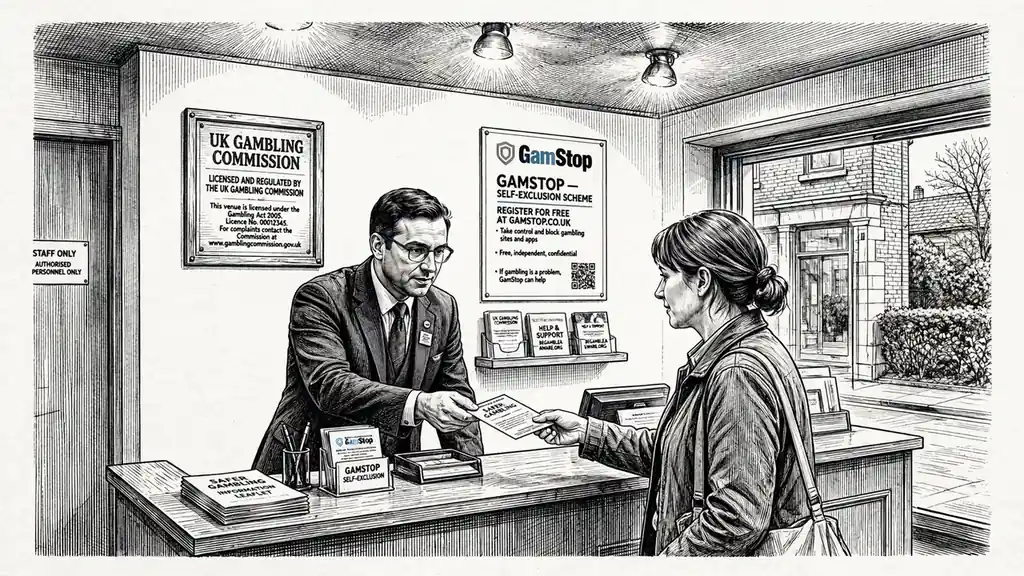
GamStop is a self-exclusion arrangement designed to prevent registered consumers from accessing participating online gambling services. A remote operator serving consumers in Great Britain is required to participate in the scheme. Consequently, a casino that genuinely accepts customers in Great Britain while remaining outside GamStop would not meet that requirement. The absence of GamStop participation is therefore a regulatory warning sign rather than a separate category of lawful British casino.
GamStop status and UKGC licensing
The UK Gambling Commission, commonly referred to as the UKGC, regulates online casinos operating within Great Britain. Any operator providing online gambling services to consumers in England, Wales or Scotland must hold a UKGC licence, regardless of where the company is incorporated or where its technical infrastructure is located. Online gambling activities also require a remote operating licence.
This distinction matters because an overseas address does not remove British licensing obligations. A casino may describe itself as offshore, international or non-GamStop, but those descriptions do not replace the requirement for a UKGC licence when the service is directed at Great Britain. Conversely, a casino holding a licence from another jurisdiction is not thereby established as a UKGC-licensed operator.
The UKGC maintains a public register of current operating and personal licences. It also identifies the operator associated with a licence, allowing the legal entity behind a website to be checked rather than inferred from branding alone. A domain appearing on a casino website is not sufficient evidence of authorisation unless the relevant operator and domain correspond with the public register.
How the status can be checked
The appropriate verification process is documentary and specific:
- identify the legal operator named in the casino’s terms or licensing information;
- locate that operator, or its licence number, in the UKGC public register;
- confirm that the listed domain matches the website being assessed;
- distinguish a current operating licence from a licence belonging to an unrelated company or individual.
The legal gambling age in Great Britain is 18. Age controls form part of the protection expected from regulated remote operators, so an uncertain or absent licensing record raises questions about how age and customer access are managed. A site’s statement that it accepts British customers should not be treated as proof that it is authorised to do so.
Player-protection implications
GamStop participation is one element of a wider protection framework. For a consumer who has activated self-exclusion, access to a non-GamStop casino may undermine the practical purpose of that decision. The issue is not simply whether a website offers different games or account terms; it concerns whether an excluded person can continue to reach remote gambling services through another operator.
The term can also obscure the difference between a casino that is unavailable to Great Britain and one that accepts British customers without the required UKGC position. Those situations are not equivalent. A foreign site that does not serve Great Britain is not automatically a British-licensed service, while a site actively taking British customers must satisfy the applicable UKGC requirements.
A licence check cannot prove every aspect of day-to-day conduct, but it provides a defined starting point. The register records current licensing information and enables the operator-domain relationship to be examined. Where that relationship cannot be confirmed, the casino’s regulatory status remains unverified. Claims about non-GamStop access should therefore be treated as a compliance issue, not as evidence of broader player protection.
Created by the ”Casinouk Bonuses Info” editorial team.